Mission
Context and originality
Hydrological models, which are essential for water management, are subject to significant uncertainty, particularly with regard to low water levels. Often optimized using only measured river flows, even though a model that performs well on this criterion may poorly represent other components (e.g., soil moisture, evapotranspiration), as shown by Bouaziz et al. (2018), they involve significant uncertainty in the representation of hydrological flows and stocks. However, the diversity of remote sensing data (snow cover, soil moisture, evapotranspiration, water stocks, water levels, etc.) offers new prospects for improving the spatial and temporal transferability of models. In the context of climate change, which is profoundly altering the spatial and temporal distribution of water resources, the contribution of spatial hydrology seems essential.
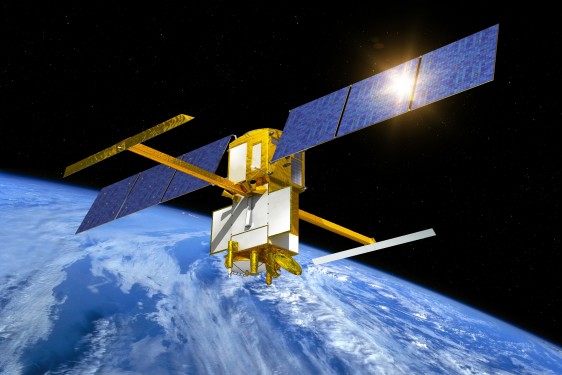
The thesis aims to demonstrate the contribution of remote sensing by exploring the joint use of multiple remote sensing data to diagnose and then improve a semi-distributed hydrological model from the GR family. The objective is to better constrain the model parameters and increase consistency between internal variables, fluxes, and observations, within a “natural” hydrology framework, i.e., one that is relatively undisturbed by anthropogenic uses. The study will be conducted on a large set of French watersheds in order to draw generalizable conclusions. A wealth of remote sensing data is now available: MODIS snow cover fraction, soil moisture (SMOS, ASCAT), GRACE total water content, evapotranspiration (MODIS, GLEAM, soon TRISHNA), and SWOT water heights. Some are well established (MODIS snow cover), others are still limited by their resolution or bias, but several studies (Riboust et al., 2018; Ettalbi et al., 2025; Hsu et al., 2025) have shown concrete benefits, such as improved consistency of flows with the combined use of runoff and snow cover or evapotranspiration, respectively.
Material
The thesis will use semi-distributed GR models, available via the open source R packages airGR and airGRiwrm, used in Explore2. Hydrological (HydroPortail) and climatic (SAFRAN) data are freely available, as are many remote sensing products. The objective is not to develop new products but to capitalize on existing data in order to arrive at an approach that can be transposed outside the academic setting. We will work in a context of hydrology with little influence, in preparation for subsequent work in a context of strong anthropization (e.g., irrigation, water reservoirs).
Research program
1. Review of remote sensing products and their use in hydrological modeling
2. Analysis of correlations between simulated variables and remote sensing data, identification of factors influencing these correlations (climate, geology)
3. Optimization with gradual addition of remote sensing data to the optimization algorithm, comparison of multi-criteria and multi-objective approaches, evaluation of temporal and ungauged transferability
4. If possible, testing the impact of “improved” models in the context of climate change using Explore2 projections
References
Bouaziz, …, Thirel, et al. Behind the scenes of streamflow model performance, HESS, https://doi.org/10.5194/hess-25-1069-2021, 2021
Ettalbi, Garambois, et al. Improving parameter regionalization learning for spatialized differentiable hydrological models by assimilation of satellite-based soil moisture data, JoH, https://doi.org/10.1016/j.jhydrol.2025.133300, 2025
Hsu, et al. Extra constraint on actual evaporation in a semi-distributed conceptual model to improve model physical realism. HSJ, https://doi.org/10.1080/02626667.2025.2468846, 2025
Riboust, Thirel, et al. Revisiting a simple degree-day model for integrating satellite data: implementation of SWE-SCA hystereses. JHH. https://10.2478/johh-2018-0004, 2019
Scientific focus
This thesis is part of the scientific strategies of CESBIO, CNES and INRAE. G. Thirel, who is leading this project, was assigned to CESBIO in early 2025 as part of a partnership between CESBIO and INRAE and the arrival of INRAE's AQUA department, as the topic of spatial hydrology is central to the concerns of both AQUA and CESBIO. The second half of the thesis grant was requested from AQUA (response in January 2026). G. Thirel has carried out extensive work on the development of GR models and participated in the development of the airGR and airGRiwrm tools and Explore2.
This thesis is part of the TOSCA programme, particularly its themes of Forecasting, Digital Twins and Hazards, Climate Variability and Cycles, and Coupling, Interfaces and Scale Interactions. It is part of the Continental Surfaces Working Group, particularly scientific issues related to the water cycle.
=================
For more Information about the topics and the co-financial partner (found by the lab!); contact Directeur de thèse - simon.gascoin@utoulouse.fr
Then, prepare a resume, a recent transcript and a reference letter from your M2 supervisor/ engineering school director and you will be ready to apply online before March 13th, 2026 Midnight Paris time!
Profile
Laboratoire
Message from PhD Team
More details on CNES website : https://cnes.fr/fr/theses-post-doctorats