Mission
Strategic Importance for CNES and French Space Leadership
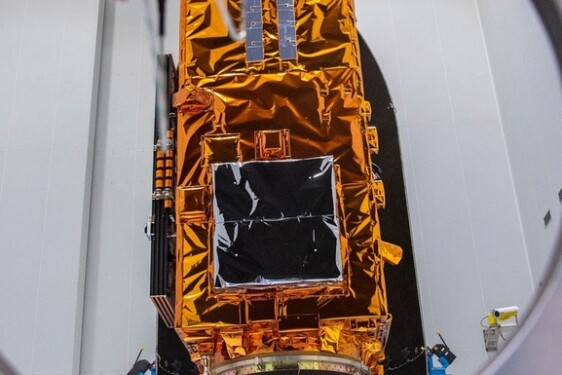
The ESA BIOMASS mission, launched on April 29, 2025, represents a cornerstone achievement in Earth observation, with France and CNES playing pivotal roles in its development and scientific exploitation. This PhD project directly supports French leadership in space-based forest monitoring by developing cutting-edge methodologies that will maximize the scientific and operational value of BIOMASS data for global forest surveillance and climate change mitigation. CNES has invested significantly in P-band SAR technology development and BIOMASS mission preparation through TOSCA research programs. This PhD project builds upon these investments by developing the next generation of data processing algorithms that will position France at the forefront of global forest monitoring capabilities.
Scientific Innovation and BIOMASS Mission Enhancement
This research develops the first physics-constrained deep neural network architecture designed explicitly for BIOMASS P-band SAR tomography applications. Unlike conventional black-box machine learning approaches, our methodology integrates fundamental electromagnetic scattering principles directly into the neural network architecture, ensuring physically consistent results while achieving unprecedented accuracy in forest structure reconstruction.
The project will deliver operational tools for generating high-resolution global forest biomass maps using BIOMASS data, addressing critical gaps in current forest monitoring capabilities. These tools will enable France to lead international efforts in assessing forest carbon stocks, supporting national commitments under the Paris Climate Agreement and EU Green Deal initiatives.
Physics-Constrained Architecture: The core innovation lies in developing custom neural network layers that enforce P-band SAR physical constraints, including non-negative backscatter, realistic height distributions, and spatial coherence. This approach overcomes the "black box" limitations of conventional deep learning while maintaining superior performance compared to traditional methods.
Scientific Excellence: The project will produce high-impact scientific publications and establish France as the global leader in physics-informed machine learning for Earth observation. This scientific leadership will attract international collaborations and research funding, reinforcing France's position in space science.
Expected Outcomes and Impact: Delivery of validated, operational software tools for BIOMASS data processing that CNES, research institutions, and commercial partners can deploy. These tools will feature user-friendly interfaces and comprehensive documentation to facilitate widespread adoption.
Timeline and Deliverables
Year 1: Development of physics-constrained neural network architectures and synthetic data generation capabilities. Validation using existing airborne P-band SAR data from French campaigns.
Year 2: Integration of BIOMASS mission data, model optimization, and uncertainty quantification implementation. Development of operational processing chains.
Year 3: Global application demonstrations, validation campaigns, and technology transfer to operational users. Preparation of scientific publications and technology documentation.
Alignment with CNES Strategic Priorities
This project directly supports multiple CNES strategic objectives: advancing French leadership in Earth observation, developing innovative data processing technologies, supporting climate change research, and strengthening international scientific collaborations. The focus on the BIOMASS mission exploitation ensures maximum return on CNES investments in P-band SAR technology development.
Potential Jury: Laurent Ferro-Famil (isae-supaero), Thuy Le Toan (CNRS), Ludovic Viillard (CNRS), Emmanuel Trouve (Univ-SMB)
5 publications recent relative to the topic
1 Ho Tong Minh et al., (2014). "Relating P-band synthetic aperture radar tomography to tropical forest biomass." IEEE Transactions on Geoscience and Remote Sensing, 52(2), 967-979.
2 Ho Tong Minh et al., (2018). "Deep Recurrent Neural Networks for Winter Vegetation Quality Mapping via Multitemporal SAR Sentinel-1." IEEE Geoscience and Remote Sensing Letters, 15(3), 464-468.
3 Ho Tong Minh et al., (2023). "Interferometric Phase Linking: Algorithm, application, and perspective." IEEE Geoscience and Remote Sensing Magazine, 11(2), 8-33.
4 Ngo, Y. N., Ho Tong Minh, D., Baghdadi, N., Fayad, I., L. Ferro-Famil & H Yuang (2022). "Tropical forest vertical structure characterization: From GEDI to P-band SAR tomography." IEEE Geoscience and Remote Sensing Letters, 19, 1-5.
5 G. Zeng, Y. Wang, H. Xu, D. Ho Tong Minh and L. Ferro-Famil (2025), "Identification of Forest Ground and Canopy Peaks From 3-D SAR Tomographic Profile Using Deep Learning," in IEEE Transactions on Geoscience and Remote Sensing, vol. 63, pp. 1-13, 2025, Art no. 5220213, doi: 10.1109/TGRS.2025.3610737.
=================
For more Information about the topics and the co-financial partner (found by the lab!); contact Directeur de thèse - Dinh.Ho-Tong-Minh@inrae.fr
Then, prepare a resume, a recent transcript and a reference letter from your M2 supervisor/ engineering school director and you will be ready to apply online before March 13th, 2026 Midnight Paris time!
Profile
Infos pratiques
MESSAGE from Phd Team
More details on CNES website : https://cnes.fr/fr/theses-post-doctorats