Mission
Clouds are critical to Earth’s radiation balance, yet their representation in climate models remains uncertain, especially regarding the liquid-to-ice phase transition (Myers et al., 2021). This aspect is key to climate models since the phase of clouds influences their radiative properties and their lifespan. Two main mechanisms are traditionally invoked to explain this transition: homogeneous nucleation, which occurs at temperatures below -38˚C, and heterogeneous nucleation, catalyzed by ice nucleating particles (INP) via the presence of certain types of aerosols. However, the atmospheric concentration of these nuclei is much lower than that of the ice crystals observed (Hobbs and Rangno, 1989). Secondary ice processes have been proposed, but they still do not explain the observed ice concentrations (Field et al., 2017), suggesting the existence of complementary mechanisms that are not yet understood.
A laboratory study suggests that sufficient energy could be generated by the collision of droplets to induce their freezing (Niehaus and Cantrell, 2015), without the need for aerosols. However, this process, which could potentially be amplified by an unstable atmosphere and intense updrafts, has never been observed or quantified in the atmosphere. This gap raises a fundamental question: can satellite observations detect and quantify cloud icing induced solely by atmospheric dynamics, independently of INPs?
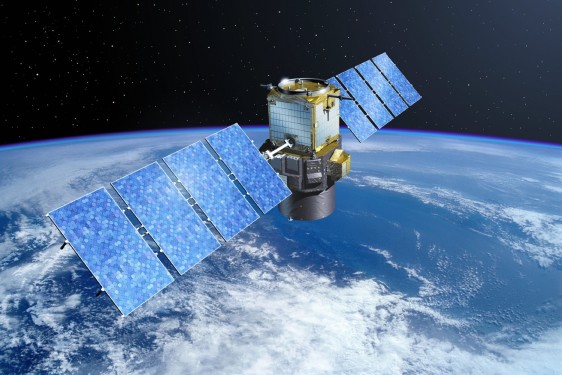
To answer this question, this project proposes to use data from instruments aboard the EarthCARE satellite (Eisinger et al., 2024). This satellite offers a unique opportunity with its lidar and radar, capable of providing detailed vertical profiles of cloud phase and the microphysical properties of hydrometeors. In addition, its Doppler radar will enable direct measurement of updraft velocities, a parameter that has been poorly constrained by atmospheric reanalyses, whose spatial and temporal resolution provides information on the general dynamics of the atmosphere but is insufficient to capture processes at the cloud scale.
Data analysis will be partly based on the Varpy Mix algorithm (Aubry et al., 2024), which determines the properties of liquid and ice phases in mixed-phase pixels, including hydrometeor size, from lidar and radar measurements and will be applied to EarthCARE observations. Different meteorological patterns will be defined to study how cloud phase and microphysical properties evolve with updrafts, while controlling for other parameters such as humidity and aerosol concentration, using available reanalyses.
The temporal dimension of glaciation will be addressed using data from the MTG (Meteosat Third Generation) satellite and the FCI (Flexible Combined Imager) instrument (Holmlund et al., 2021). A cloud tracking algorithm (Coopman et al., 2020; Seelig et al., 2021), will identify the precise moment when a cloud transitions from the liquid phase to the ice phase. The tracked clouds will then be co-located with EarthCARE observations to analyze their vertical profile at the moment of transition. This approach will make it possible to quantify the impact of updrafts on glaciation and assess whether this mechanism can explain some of the transitions observed, independently of INPs.
Finally, specific case studies will be analyzed as “natural laboratories” to test the proposed new parameterizations. Depending on the progress achieved during the PhD, these cases will be simulated to validate their robustness and applicability in climate models like ICOsahedral Nonhydrostatic (ICON) (Zängl et al., 2015) or Regional Atmospheric Modeling System (RAMS) (Pielke et al., 1992). The results of this thesis could thus contribute to reducing uncertainties related to the representation of clouds in models by integrating a dynamic glaciation mechanism that has been neglected until now.
This project is part of an innovative approach combining the use of satellite data and advanced analysis methods to shed light on a key process in the climate system. It draws on the expertise of the supervisory team and the host laboratory: cloud tracking algorithms, Varpy Mix, and satellite observations. It paves the way for a better understanding of the interactions between atmospheric dynamics and cloud microphysics, with potential implications for climate projections.
Aubry, C. et al (2024), doi: 10.5194/amt-17-3863-2024; Coopman, Q. et al (2020), doi: 10.1029/2019JD032146; Eisinger, M et al (2024), doi: 10.5194/amt-17-839-2024; Field, P. R. et al (2017), doi: 10.1175/AMSMONOGRAPHS-D-16-0014.1; Hobbs, P. V., and Rangno, A. L. (1985), doi: 10.1175/1520-0469(1985)042<2523:IPCIC>2.0.CO;2; Holmlund, K. et al (2021), doi: 10.1175/BAMS-D-19-0304.1; Myers, T. A. et al (2021), doi: 10.1038/s41558-021-01039-0; Niehaus, J., and Cantrell, W. (2015), doi: 10.1021/acs.jpclett.5b01531; Pielke, R. A., (1992), doi: 10.1007/BF01025401; Seelig, T. et al (2021), doi: 10.1029/2021JD035577; Zängl, G. et al (2015), doi: 10.1002/qj2378
=================
For more Information about the topics and the co-financial partner (found by the lab!); contact Directeur de thèse - quentin.coopman@univ-lille.fr
Then, prepare a resume, a recent transcript and a reference letter from your M2 supervisor/ engineering school director and you will be ready to apply online before March 13th, 2026 Midnight Paris time!
Profile
Laboratoire
Message from PhD team
More details on CNES website : https://cnes.fr/fr/theses-post-doctorats