Mission
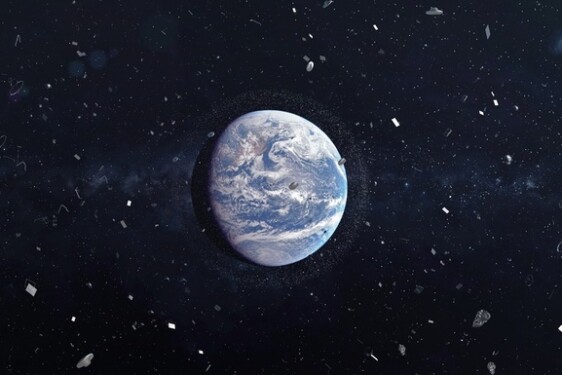
The rapid increase of Resident Space Objects (RSOs), particularly space debris, has heightened the importance of Space Surveillance and Tracking (SST) for ensuring the safety and sustainability of space operations. A central challenge is reliable collision risk assessment. The key decision metric is the Probability of Collision (Pc), which guides satellite operators in determining whether to perform avoidance maneuvers once a risk threshold is exceeded.
Currently, the standard approach relies on a two-dimensional Pc (Pc2D) calculation, which reduces the problem to integrating a bivariate Gaussian distribution over a disk defined by the combined hard-body radii of the objects. This method is computationally efficient and widely used in operational conjunction assessments. However, its accuracy strongly depends on the covariance matrix, which is often uncertain due to orbit determination limitations. A known issue is the dilution phenomenon, where Pc paradoxically decreases as uncertainty grows, leading to potential misinterpretation of collision risk.
Various strategies have been proposed to mitigate covariance realism issues, including covariance scaling, PcMax approximations, and heuristics implemented in operational tools. Yet, no consensus has been reached, as trade-offs remain between accuracy, robustness, and scalability in operational contexts.
The overarching goal of this thesis is to advance robust mathematical and computational tools for collision risk assessment when the assumptions underlying Pc2D break down. The work addresses three main challenges: (1) uncertainty in covariance matrices, (2) uncertainty in the Time of Closest Approach (TCA), and (3) extending Pc2D beyond linear Gaussian settings into nonlinear dynamical regimes.
Covariance uncertainty. Standard Pc2D assumes accurate covariance knowledge, but in practice these matrices are affected by measurement errors, model approximations, and numerical artifacts. This can mislead Pc estimates, particularly in the dilution regime. The thesis integrates covariance uncertainty into Pc2D using Differentially Finite function representations and Gaussian moment techniques, enabling efficient derivative and higher-order moment computations and facilitates PcMax optimization.
TCA uncertainty. Pc2D also assumes that the TCA is precisely known, but in reality it is derived from uncertain orbital state propagation and temporal shifts may affect the projected encounter geometry. The thesis proposes to model TCA as a random variable via Gaussian-process zero-crossings of the squared-range derivative, analyzed with Kac–Rice formulas, first-passage time theory, and recent numerical methods for stochastic differential equations. This yields a probabilistic framework for TCA estimation that integrates directly into Pc2D evaluation.
Nonlinear dynamics. In realistic regimes, Gaussian and linear approximations fail to capture the full behavior of relative motion. Recent approaches use high-order Taylor expansions to propagate statistical moments and construct semi-analytical approximations of closest-approach distance distributions. The thesis extends Pc2D into nonlinear settings by leveraging these methods to build Gaussian surrogates that can be combined with covariance and TCA uncertainty models.
Validation. The proposed methods will be validated on real-world datasets provided by CNES and Airbus Defence and Space, containing orbital state vectors, covariance matrices, and documented conjunction events. These tests will assess accuracy, robustness, and computational feasibility, demonstrating the operational relevance of the framework.
In summary, this thesis develops a unified probabilistic framework for collision risk assessment that accounts for covariance uncertainty, TCA variability, and nonlinear dynamics. By bridging classical Pc2D theory with modern stochastic and analytical techniques, the work aims to strengthen the reliability of decision-making in space traffic management and contribute to sustainable space operations.
=================
For more Information about the topics and the co-financial partner (found by the lab!); contact Directeur de thèse - arzelier@laas.fr
Then, prepare a resume, a recent transcript and a reference letter from your M2 supervisor/ engineering school director and you will be ready to apply online before March 13th, 2026 Midnight Paris time!
Profile
Laboratoire
Message from PhD team
More details on CNES website : https://cnes.fr/fr/theses-post-doctorats