Mission
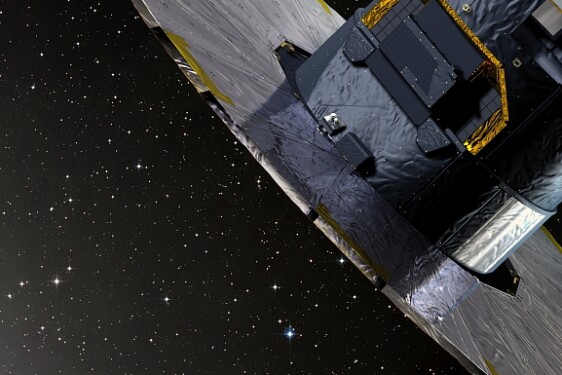
The ESA/Plato mission will launch in just over a year from now, and its primary objective is to find and characterise Earth-like planetary systems. It will observe a large region of the sky for a minimum of two years and exploit photometric light curve analysis. To achieve its goal of reaching a 2% precision in the radius and a 10% precision in the age, it will use the technique of stellar asteroseismology – the study of the internal structure of the host star – by extracting seismic frequencies from the light curves. The characterisation of the planet properties depends entirely on the knowledge of the host’s properties.
As part of the global effort of pipeline development within the PLATO consortium, a team “Benchmark Stars” (WP125500, led by Creevey), has been put in place to provide independent measures of stellar properties to (1) test the stellar pipelines, (2) provide constraints to test and prepare the next generation of models that provide the stellar properties, and (3) validate the Plato data once it arrives. For (1) and (2) there is no requirement that the star be within the Plato field of view, while for (3) this is indeed the case.
One of the only unique model-independent methods to test the accuracy of the derived stellar radii from the seismic pipeline is by doing a direct comparison of the output of the pipelines with independently measured stellar radii. Interferometry allows one to measure the angular diameter of the star, and when coupled with a distance measurement (from the Gaia mission), provides this directly measured radius. This, however, can only be done for a very restricted subset of stars due to the constraints with the current interferometric arrays - the stars need to be bright enough and have the 'right' angular diameter size.
Very recently, a new optical interferometric instrument, called SPICA, was developed by the Nice team. It is currently operating on the CHARA array (USA). This has changed this paradigm by allowing us to reach fainter samples. This increases the number of stars we can measure with interferometry with high precision.
We have obtained interferometric data on a number of these Benchmark Stars using the CHARA/SPICA instrument. We also have confirmed observations for the next year to help complete our sample, and additional observation proposals have been submitted with ESO/VLTI. These latter focus on stars in the first Plato field of view and which have been added to the “scvPIC” (science, calibration and validation stars of the Plato Input Catalogue).
This PhD will focus on the exploitation and analysis of this interferometric data set from the Benchmark stars. Some of these data are already available to analyse. It will additionally exploit the Gaia archive (DR4) along with other archives to complement these data to derive other model-independent properties. The immediate goal is to publish the stellar properties for a set of ~40 benchmark stars. The PhD student will additionally participate in the validation activities of the PLATO pipelines, by interacting directly with the developers of the pipeline.
For a small subset of the best characterised stars, the PhD student will exploit existing asteroseismic data to provide “accurate” and “precise” model-dependent stellar masses and ages, as part of the deliverable of the Benchmark Stars WP.
The student will additionally have the opportunity to participate in the first exploitations of the PLATO asteroseismic data through the PLATO working groups.
=================
For more Information about the topics and the co-financial partner (found by the lab!); contact Directeur de thèse - orlagh.creevey@oca.eu
Then, prepare a resume, a recent transcript and a reference letter from your M2 supervisor/ engineering school director and you will be ready to apply online before March 13th, 2026 Midnight Paris time!
Profile
Laboratoire
MESSAGE from Phd Team
More details on CNES website : https://cnes.fr/fr/theses-post-doctorats