Mission
Methane (CH4), the second most important anthropogenic greenhouse gas after carbon dioxide, plays a key role in global warming. Its atmospheric concentration depends on the balance between emissions and chemical reactions. Methane is removed when it reacts with hydroxyl radicals (OH) or other oxidants (O1D, chlorine) and when it deposits on the ground.
Most CH4 emissions (about 70% by mass) result from microbial activity in anaerobic environments—natural wetlands, rice paddies, landfills, wastewater plants, and the digestive tracts of ruminants and termites. Methane also has thermogenic origins, released by fossil fuel leaks, whether natural or during gas, oil, and coal exploitation. Pyrogenic CH4 comes from incomplete biomass combustion during vegetation fires, agricultural burning, or fuel use. The diversity and variability of these sources make global and regional methane budgets highly uncertain, hindering the identification of specific sources and regions responsible for concentration changes.
In the Arctic, main sources include natural wetlands, freshwater bodies, gas leaks from extraction and transport, biomass fires, and geological seepages. The vast Arctic wetlands and peatlands make it a key region for assessing CH4 sources and sinks. Seasonal contrasts are strong: in winter, emissions are mostly anthropogenic, while in summer, they combine natural and anthropogenic origins, sometimes with biomass fires.
The Arctic is highly sensitive to climate change: warming is stronger there than elsewhere, and ecosystems react sharply to temperature shifts and freeze–thaw cycles. Changes in vegetation, precipitation, and wetland extent directly affect CH4 fluxes. Permafrost thawing and the destabilization of methane hydrates on the continental shelf could release large amounts of methane, amplifying climate change through positive feedbacks.
Better knowledge of Arctic CH4 emissions would reduce global uncertainties and improve detection of regional changes linked to climate impacts. The PhD project aims to constrain CH4 emissions using atmospheric inversion, which combines atmospheric concentration measurements with transport models to infer fluxes. Current estimates remain uncertain due to limited access and sparse observations. Harsh conditions, geopolitical restrictions, and financial constraints limit data collection. Networks exist in Alaska, Canada, Scandinavia, and Siberia, but maintenance difficulties reduce long-term coverage. Siberia, representing half of the Arctic perimeter, is currently inaccessible.
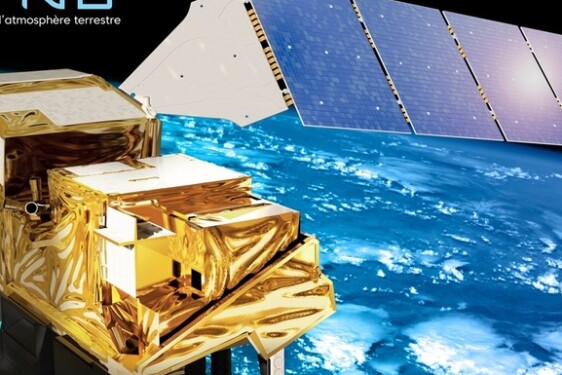
A new generation of satellite observations now offers unprecedented opportunities to study methane and surface processes. Sentinel-5P (launched 2018) and Sentinel-5 provide high-resolution Arctic methane maps via SWIR sensors during summer. IASI (2006) and IASI-NG (2025) supply year-round thermal infrared data. The upcoming MERLIN mission (2029), based on LIDAR technology, will bring new perspectives for Arctic monitoring.
This PhD project will assimilate available atmospheric and satellite data to reduce uncertainties in Arctic CH4 sources and sinks for recent years. First, the potential of all satellite datasets over the Arctic will be evaluated. Then, to better understand environmental drivers of methane fluxes, simple models simulating emissions from Arctic wetlands (SatWetCH4) and peatlands (JSBACH-HIMELI) will be integrated into the inversion framework. Using Earth observation data (e.g., MODIS for soil carbon), methane flux models will be optimized with environmental and meteorological variables.
The research will explore the benefits of jointly assimilating methane concentration and environmental data that constrain wetland activity. This combined approach will improve the quantification of natural CH4 emissions and strengthen understanding of their variability. Ultimately, this work will lay the foundation for predictive studies assessing the future impact of climate change on Arctic methane fluxes.
=================
For more Information about the topics and the co-financial partner (found by the lab!); contact Directeur de thèse - antoine.berchet@lsce.ipsl.fr
Then, prepare a resume, a recent transcript and a reference letter from your M2 supervisor/ engineering school director and you will be ready to apply online before March 13th, 2026 Midnight Paris time!
Profile
Laboratoire
MESSAGE from Phd Team
More details on CNES website : https://cnes.fr/fr/theses-post-doctorats