
Mission
Compact objects (black holes, neutron stars, white dwarfs) are amongst the most extreme objects in the Universe. They play important roles in many systems in the Universe, notably in galaxies where we think that the influence of the black hole can help regulate the stellar mass and in globular clusters, where compact objects in binaries can delay the gravitational collapse of the system. Neutron star matter is also unique and understanding its nature would allow us to complete our understanding of all matter in the Universe.
Compact objects can be difficult to find as they are often faint and distant. Their extreme nature means that they radiate in the X-ray, but they are also highly variable, so one way to find them is when they become bright during an outburst. Aside from the known compact object transients such as X-ray binaries, cataclysmic variables, gamma-ray bursts/gravitational wave events, supernovae, tidal disruption events, magnetar bursts, type I X-ray bursts etc, there are also new phenomena such as Fast Radio Bursts, for which we do not yet know the origin. Many of these transient events are due to accretion which is ubiquitous in the Universe, such as around young stars, at the origin of planets, and which feeds supermassive black holes in the centres of galaxies. However, the accretion phenomena remains poorly understood and additional observations will help us constrain the phenomenon. Today, time domain astronomy is becoming an important tool with which to better understand compact objects. Studying them can also help us answer some big open questions, such as what is the physical mechanism behind super-Eddington accretion, how do black holes grow to become supermassive very early in the Universe or what is the mass function of stars in the Universe (e.g. Webb 2019)?
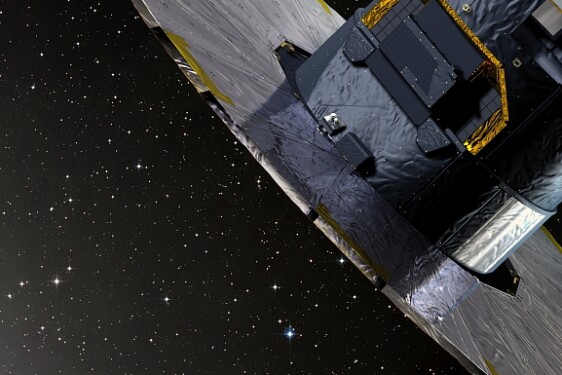
The X-ray observatory, XMM-Newton, was launched by the European Space Agency in December 1999 and has accumulated more than 25 years of data, where the most recent catalogues have more than a million detections (Webb et al. 2020). Recent development in the framework of the H2020 project, XMM2ATHENA, has allowed us to probe XMM-Newton transients in close to real time, for the first time since the beginning of the mission. This allows us to follow up the transient in the X-ray, partly with XMM-Newton, but also with the recently launched SVOM satellite as well as with other multi-wavelength observatories, whilst it is still bright, providing good quality data to address questions such as those outlined above. Additional tools developed during the XMM2ATHENA programme also provide information on source classification, redshift, and short term faint variability which can be used to better understand the recently detected transient.
This PhD will enable the student to learn about the different manifestations of compact objects. They will supplement the methods already in place to optimise the search for and detection of compact objects. The student will learn data reduction and analysis as well as modelling in order to constrain the physical parameters of the detected objects. With a sufficiently large sample of a specific source-type, it will also be possible to conduct population studies. Examples of studies that could be conducted on sufficiently large populations include investigating tidal disruption events (TDEs) to understand their role in the growth of supermassive black holes, by constraining the rate of TDEs and the accretion rate (sub/super-Eddington) and the mass accreted. This could also be extended to the duration of outbursts, why they are so variable, whether this is related to the accreted mass or the inefficiency of debris circularisation. Further, some TDEs have a hard X-ray spectrum, unlike most TDEs, but it is not clear whether this is due to shocks or the launch of jets. Also some TDEs show quasi-periodic eruptions (QPEs) in the late-time X-ray lightcurve, but the origin and nature of this phenomenon is unknown and requires further investigation. Finally, the multi-wavelength emission is very different from TDE to TDE. It should be possible to determine whether this is due to our line of sight, shocks in the system, or something else. Other systems that can be studied include black hole mergers, particularly massive black holes, in order to understand their role in the growth of supermassive. Studying a population should enable constraints to be made on when these mergers were important in the evolution of black holes and what is the impact on the galaxy. Massive black hole binaries will also be used to prepare strategies for detecting coalescences and to follow up on those detected by LISA, using electromagnetic waves. Finally, the sample would enable progress to be made on questions concerning the formation and evolution of intermediate-mass black holes.
=================
For more Information about the topics and the co-financial partner (found by the lab!); contact Directeur de thèse - Natalie.Webb@irap.omp.eu
Then, prepare a resume, a recent transcript and a reference letter from your M2 supervisor/ engineering school director and you will be ready to apply online before March 13th, 2026 Midnight Paris time!
Profile
Laboratoire
Message from PhD team
More details on CNES website : https://cnes.fr/fr/theses-post-doctorats