
Mission
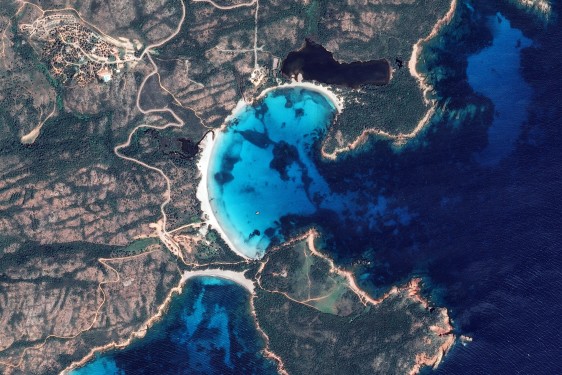
Remote sensing (RS) imagery provides a unique opportunity to monitor the Earth and its dynamics, offering continuous and large-scale observations of both environmental and human activities. Detecting extreme events in these data, such as floods, wildfires, or infrastructure damage, is essential for timely response and risk management. Yet, these events typically affect small areas, occur briefly, and often lack reliable annotations, which makes their automatic detection particularly challenging. Automation could improve accuracy and response time from crisis cells, such as CIEST2 (https://dinamis.data-terra.org/ dispositifs-urgence/) or Copernicus EMS (https://emergency.copernicus.eu/). Most existing approaches for natural hazard detection in RS imagery rely on supervised learning [2].
While these methods have achieved notable success in detecting phenomena such as deforestation or floods, they depend on large labeled datasets that are expensive and often unavailable for rare or unexpected situations. In addition, supervised models tend to generalize poorly to new event types or geographical contexts. These challenges motivate the exploration of unsupervised approaches, where models can learn normal patterns from abundant unlabeled data and identify deviations as potential anomalies. In particular, generative models (e.g., VAEs, GANs, and more recently diffusion models [6] and flow matching [11]) have emerged as a promising direction, including recent models trained on Earth observation data [9,7].
These models have demonstrated remarkable capabilities in generating realistic and diverse images. More interestingly, beyond image synthesis, they also implicitly or explicitly learn the underlying data distribution of the images, which makes them particularly valuable for detecting out-of-distribution samples or “anomalies,” since deviations from the learned distribution can reveal rare events [5,10], without the need for explicit labels.
However, most existing generative estimators produce a single likelihood or anomaly score per image, which is not well suited to RS data. In practice, rare events often occupy only a very small fraction of large satellite images, while the regions of interest may cover only a few dozen pixels. As a result, global anomaly scores may overlook subtle, localized changes, such as construction sites.
To overcome these limitations, this PhD will focus on developing models capable of producing dense anomaly maps across the image. In the first step, we will assume that we have access to specific imagery in which an exceptional event has occurred, e.g. a trigger of Copernicus EMS, and aim to localize the anomalous regions in the image without supervision, using methods such as referring segmentation [8], saliency-based explanations [13,3], or unsupervised object localization [14], to highlight the most informative areas.
In the second step, we will try to go further and fully automate the anomaly detection, i.e. localize anomalies in general imagery. To do so, we design spatially resolved generative estimators that directly produce dense, pixel-level anomaly scores based on likelihood estimation [6]. In particular, we will explore ways to condition the generative models on contextual information, such as location and date, to enhance spatial and temporal coherence in anomaly detection.
To ensure the proposed methods can be realistically evaluated, the project will leverage existing benchmark datasets for rare event detection, such as xView2 [1] for disaster assessment, and Burn Scars HLS [12] for wildfire impact mapping.
References
[1] The xView2 AI Challenge.
[2] Akhyar, et al. Deep artificial intelligence applications for natural disaster management systems: A methodological review. Ecological Indicators, 2024.
[3] Chen, et al. gscorecam: What objects is clip looking at? ACCV, 2022.
[4] Fučka, et al. Transfusion–a transparency-based diffusion model for anomaly detection. ECCV, 2024.
[5] Graham, et al., Denoising diffusion models for out-of-distribution detection. CVPR, 2023.
[6] Ho, et al. Denoising diffusion probabilistic models. NeurIPS, 2020.
[7] Jakubik, et al. Terramind: Large-scale generative multimodality for earth observation.
preprint, 2025.
[8] Ji, et al. A survey of methods for addressing the challenges of referring image segmentation. Neurocomputing, 2024.
[9] Khanna, et al. DiffusionSat: a generative foundation model for satellite imagery. ICLR, 2024.
[10] Le Bellier et al. Detecting out-of-distribution earth observation images with diffusion models. CVPR, 2024.
[11] Lipman, et al . Flow matching for generative modeling. ICLR, 2023.
[12] Phillips, et al. HLS Foundation Burnscars Dataset, 2023.
[13] Selvaraju, et al. Grad-cam: Visual explanations from deep networks via gradient-based localization. ICCV, 2017.
[14] Simeoni, et al. Unsupervised object localization in the era of self-supervised vits: A survey. International Journal of Computer Vision, 2025.
=================
For more Information about the topics and the co-financial partner (found by the lab!); contact Directeur de thèse - nicolas.audebert@ign.fr
Then, prepare a resume, a recent transcript and a reference letter from your M2 supervisor/ engineering school director and you will be ready to apply online before March 13th, 2026 Midnight Paris time!