Mission
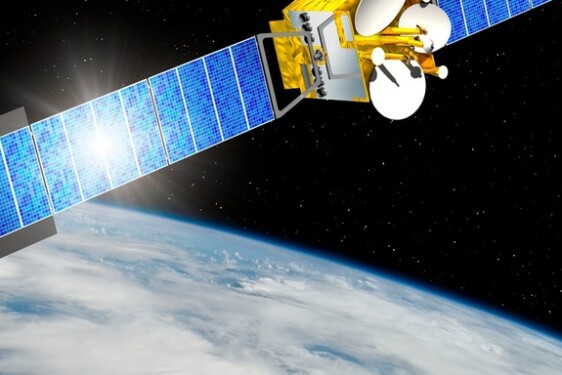
The Quantum Internet, currently under development, requires mastering entanglement distribution in optical fibers over short distances (<150 km) but also via satellite over longer distances.
On the ground, entanglement distribution is performed daily in various research laboratories in France, the USA, China, Austria, Germany, etc. The quantum optics Team at the INPHYNI laboratory, which will lead this thesis, has developed a quantum network "Quantum@UNiCA" that enables quasi-operational quantum cryptography based on an entanglement protocol (BBM92). Their recent developments have made it possible to connect this quantum network to an optical ground station (MéO telescope) to provide an entry point to space, with a view to connecting with a quantum satellite, such as Eagle-1 (currently developed by SES) or QINSAT (future French quantum satellite - phase A of CNES).
INPHYNI is currently carrying out very first tests with this MéO station to move towards sky tests with a satellite. To date, such tests have been carried out by the Chinese with the Micius satellite (Rev. Mod. Phys. 94, 035001 (2022), Science 356, 1140 (2017), Nature 549, 43 (2017), Phys. Rev. Lett. 120, 030501 (2018), Nature 589, 214–219 (2021), Nature 582, 501–505 (2020), Nature 549, 70 (2017)) and more recently with Jinan-1 (Nature 640, 47-54 (2025)). China has also conducted quantum cryptography tests with Russia (Vol. 32, Mar 2024, Optics Express 11964) and with South Africa (Nature 640, 47–54 (2025)).
Unfortunately, France is lagging far behind in these developments. However, the international community has mainly focused on non-entanglement-based quantum cryptography. This thesis will therefore be innovative, internationally, in its focus on effects involving entanglement to move towards the quantum Internet (i.e. quantum information networks - QIN).
The student will work on various technologies: degenerate or non-degenerate entangled photon sources, quantum polarization and time-energy analyzers, time synchronization system, compatibility with quantum memories, etc.
The physical phenomena that can be addressed are multiple: decoherence of entanglement in noisy channels (e.g., atmosphere), effects of atmospheric turbulence and mitigation in quantum communications, Raman effect involved in transmission of multiplexed quantum and classical fluxes in an optical fiber, Hong-Ou-Mandel effect and teleportation involving photons coming from space, storage of entanglement in quantum memories. An important criterion for the success of this thesis will be the demonstration of the control of quantum channels in free space.
=================
For more Information about the topics and the co-financial partner (found by the lab!); contact Directeur de thèse - Sebastien.TANZILLI@univ-cotedazur.fr
Then, prepare a resume, a recent transcript and a reference letter from your M2 supervisor/ engineering school director and you will be ready to apply online before March 13th, 2026 Midnight Paris time!
Profile
Currently pursuing a Master's degree (or equivalent) in Quantum Optics.
Possess the following skills: Knowledge of quantum optics/photonics Laboratory experience Knowledge of Python programming, Ability to read scientific articles, English level allows you to read, write, and speak using technical terms Knowledge of space technologies, Rigor, Analysis,
Good analytical and synthesis skills, proactive and able to make suggestions with good interpersonal skills Good communication skills.