
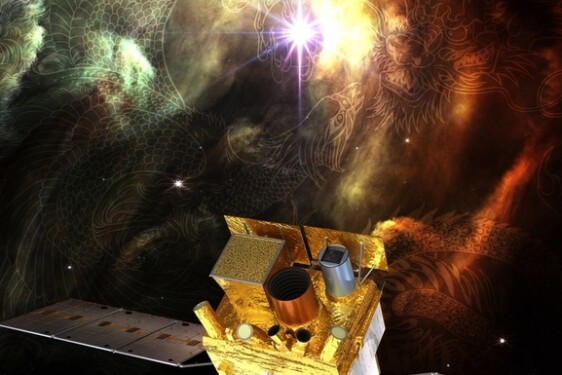
Mission
Supermassive black holes (SMBHs) located at the center of galaxies and stellar-mass black holes in X-ray bright binary systems (XRBs), exhibit highly variable and often transient X-ray and gamma-ray emissions. Additionally, Tidal Disruption Events (TDEs) —which occur when a star approaches a massive black hole and is tidally disrupted— radiate mostly in the UV and soft X-rays.
One of the key questions on these accreting black hole (BH) systems is the connection
and interplay between various processes occurring in the active regions around the BH: the accretion disk, the hot corona and the relativistic jets. Another crucial open question is whether particle acceleration is primarily driven by hadronic or leptonic mechanisms.
A clearer understanding of these mechanisms may be achieved through multi-wavelength observations of the sources coupled with the detection of other cosmic messengers, in particular high-energy neutrinos.
While accretion/ejection processes in AGNs typically evolve on longer timescales, TDEs
and XRBs offer a rare opportunity to observe the full accretion cycle, possibly including (relativistic) jet formation, within a practically observable timescale. These sources are key targets for the new SVOM and Einstein Probe space missions. Leveraging our involvement in both missions, we propose a comprehensive study of accretion and ejection processes in black-hole systems across different scales. This study will utilize multi-wavelength data from both SVOM and Einstein Probe, along with multi-messenger data available to the High-Energy Astrophysics group at APC.
Launched in June 2024, SVOM has four instruments onboard, two narrow field of view
telescopes: the visible telescope (VT) and the X-ray telescope (MXT); a large field of view hard X-ray coded-mask imager, ECLAIRs, and a non-imaging gamma-ray monitor (GRM).
ECLAIRs, with its 89° x 89° field of view, provides sky images over the 4–150 keV energy range with angular resolution of less than 1°. It is the primary instrument for detecting, locating, and monitoring variable high-energy sources, providing flux, timing, and spectroscopic information on X-ray sources through data reduction pipelines developed at APC.
Mainly dedicated to gamma-ray burst detection, the SVOM mission is also monitoring and studying flaring activity of many other sources and in particular AGNs and galactic BH by combining ECLAIRs data with VT and MXT data collected during the so-called General Program (GP) of the mission. The SVOM multi-wavelength GP data will provide a robust foundation for studying the temporal and spectral variability of accreting BHs from the onset of their outbursts. In addition, SVOM Target-of-Opportunity (ToO) observations can be triggered following bright AGN, TDE or XRB outbursts, providing crucial measurements to deepen our understanding of the accretion-ejection processes at work in these systems. The APC team holds key responsibilities in these observing programs (GP & ToO) that will be central to the scientic projects of the PhD candidate.
Einstein Probe is a Chinese-led space mission with substantial European contribution, focused on time-domain astronomy thanks to its Wide Field-of-view Telescope (WXT) which covers ~3600°^2. In addition to the WXT, the onboard Follow-up X-ray Telescope (FXT), thanks to its higher sensitivity, enables more detailed measurements of the soft X-ray spectra and lightcurves over longer timescales. Launched in January 2024, this powerful new soft X-ray facility is expected to increase the number of known X-ray transient sources associated with BHs by at least one order of magnitude, hence
opening a new window on the black hole accretion/ejection processes at different
scales.
Data from SVOM and Einstein Probe available in the team will provide a wealth of
groundbreaking material for studying the accretion and ejection processes in BH
systems. The PhD candidate will have the opportunity to lead multi-wavelength and
multi-messenger observing campaigns focused on accreting black holes; process and analyze the rich datasets from SVOM and Einstein Probe; and finally interpret the multi-wavelength/multi-messenger data to constrain the underlying physical mechanisms driving the accretion/ejection phenomena. Depending on the activity of the sources and on his/her own interests, the PhD candidate will have the option to preferentially work on either galactic or extragalactic BH systems.
=================
For more Information about the topics and the co-financial partner (found by the lab!); contact Directeur de thèse - coleiro@apc.in2p3.fr
Then, prepare a resume, a recent transcript and a reference letter from your M2 supervisor/ engineering school director and you will be ready to apply online before March 13th, 2026 Midnight Paris time!
Profile
Laboratoire
MESSAGE from Phd Team
More details on CNES website : https://cnes.fr/fr/theses-post-doctorats