Mission
THESIS TOPIC OVERVIEW
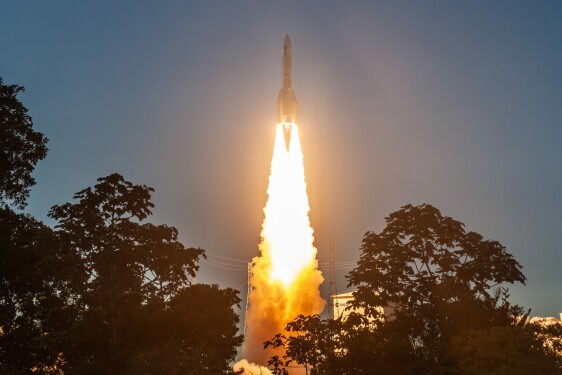
Electrohydrodynamic (EHD) emission is a technique for generating charged particulate jets or droplets by applying an intense electric field to a liquid. It is used in various cutting-edge fields, particularly in space propulsion (ionic liquid thrusters) [1].
Ionic liquids (ILs), due to their low vapor pressure, thermal and electrochemical stability, and conductive properties, are particularly well-suited for this application [2]. However, during EHD emission, they are subjected to extreme physical and electrical stresses (high electric fields, anodic oxidation in the presence of residual oxygen or atomic oxygen environments in low Earth orbit, ion or electron bombardment, localized heating, etc.), which can lead to their chemical and physical transformation, thereby impacting the behavior of the system [3].
Identifying potential evolutions of ionic liquids and deciphering the associated mechanisms is therefore a fundamental challenge for EHD applications. One of the first steps of the thesis will be to reproduce and apply conditions representative of EHD (electric field, current, impact of regular polarity changes, temperature, ambient atmosphere) to ILs.
To effectively decouple the various phenomena involved, these parameters will be studied both collectively and separately using appropriate experimental setups. To achieve this, techniques at different scales—from molecular to macroscopic (IR, UV-Vis, NMR spectroscopy, mass spectrometry, thermal analysis via TGA or DSC, microscopy, etc.)—will be combined.
This knowledge will enable the modeling of IL evolution mechanisms and the proposal of guidelines for developing event higher-performing ILs.
At the intersection of cutting-edge propulsion technologies for space thrusters, chemistry, physical chemistry, and materials science, the ultimate goal is to contribute to the optimization of EHD thruster design.
LOCATION
The thesis will be conducted primarily at the PHENIX laboratory (Sorbonne Université / CNRS) in Paris, as well as at the partner company, whose laboratories are located in the Paris Region.
=================
For more Information about the topics and the co-financial partner (found by the lab!); contact Directeur de thèse - emmanuelle.dubois@sorbonne-universite.fr
Then, prepare a resume, a recent transcript and a reference letter from your M2 supervisor/ engineering school director and you will be ready to apply online before March 13th, 2026 Midnight Paris time!
Profile
CANDIDATE PROFILE
Education and Experience
Master’s degree (M2) or engineering degree in Chemistry or Physical Chemistry, with a physics component.
An experimental internship in a laboratory involving molecular and/or material characterization methods.
Desired Skills
• Knowledge of analytical and/or organic chemistry.
• Autonomy, rigor, pragmatism, and creativity.
• Interest in multidisciplinary work and teamwork.
• Strong communication skills, particularly with stakeholders from diverse backgrounds (physicists, chemists, physical chemists, academics, industry professionals, etc.).
• Good level of English.