Mission
Synergies between SWOT and CO3D for High-Resolution RIver FloodPlain DEM and Improved DischArGe (RIVAGE)
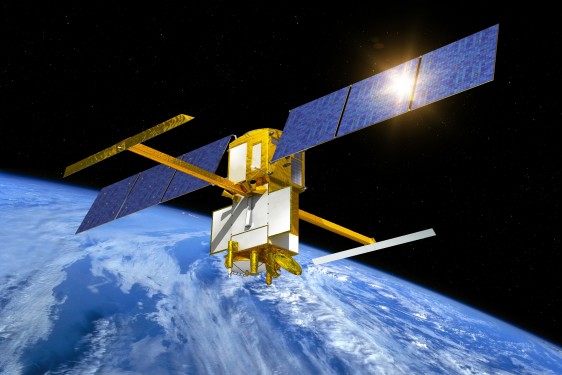
Flooding is among the most destructive natural disasters worldwide. Despite advances in climate science, many communities remain poorly equipped to predict river responses to extreme weather. A key limitation is the lack of reliable data on river and floodplain topography for accurate flood modeling. Global digital elevation models (DEM) offer a consistent topographic source but lack the resolution and vertical accuracy required to represent riverbeds. Recent Earth observation missions, such as the Surface Water and Ocean Topography satellite, have transformed hydrology by providing global two-dimensional measurements of water surface elevation and extent. The simultaneous observation of height and width has enabled bathymetry and discharge estimation at the global scale. SWOT-derived bathymetry is essential for estimating discharge, yet significant uncertainty persists due to errors in river width retrieval, particularly in narrow, vegetated, or morphologically complex reaches. Addressing these limitations requires independent, higher resolution topography capable of constraining SWOT observations and improving river corridor geometry. The CO3D mission, launched in July 2025 by CNES in partnership with Airbus, provides this complementary dataset. CO3D delivers global high-resolution (HR) stereo optical imagery, producing Digital Surface Models (DSMs) with meter-scale accuracy. Over the next three to five years, CO3D will achieve near-global coverage, creating a consistent topographic layer for both terrestrial and fluvial environments. RIVAGE aims to exploit this synergy by constraining SWOT-derived bathymetry with CO3D topography, first on selected basins and later at the global scale.
1. Bathymetry from high-resolution topography : We will derive hydraulic floodplain Digital Elevation Models (DEMs) by transforming CO3D DSMs using CNES tools such as Bulldozer and hydro-compatible DEM workflows. These will define river corridor geometry, extract centerlines, cross-sections, and floodplain morphology. Building on Rezende’s PhD work (2022-2025) on floodplain DEM generation from MNT and SWOT data, we will adapt the method to ingest CO3D’s HR input. The resulting cross-sections will capture detailed bank variability and fine-scale topography. For the submerged channel, we will perform a constrained estimation of bed level using in-situ or unbiased SWOT discharge as boundary conditions, solving jointly for bed elevation and friction. The refined bathymetry will feed hydraulic simulations using SIC4DVar and Telemac2D for 1D and 2D flow modeling under different hydrological conditions. These simulations will evaluate improvements in water level, discharge, and inundation extent relative to SWOT-only or DEM-based approaches. Once validated, the bathymetry will be integrated in a data assimilation framework where SWOT water levels are used to estimate discharge and roughness under known geometry. Comparisons between SWOT-only and SWOT-CO3D bathymetries will quantify systematic and random errors, revealing performance patterns across diverse river types.
2- Narrow Rivers Representation: Special attention will be given to narrow rivers detected by SWOT SLC and PIXC products but missing from RiverSP, as they are not represented in SWORD v17. These rivers, typically 10–30 m wide, are expected to be included in SWORD v18, with corresponding RiverSP data potentially available in a future SWOT version E. However, challenges already identified in larger rivers with version D will likely be amplified in smaller rivers, reinforcing the need for CO3D’s HR topography. We propose to evaluate CO3D’s performance using a subset of SWOT data reprocessed with SWORD v18, focusing on improvements in centerline definition, water body localization, and derived bathymetry for these smaller rivers. CO3D’s HR capability could serve as a foundation for defining river vectors in future Sentinel-3 Next Generation Topography products, paving the way for more accurate representation of narrow and complex river systems.
3. Potential of velocity in discharge estimation: We will also investigate the use of CO3D for surface velocity retrieval. Through targeted acquisitions or short temporal pairs, CO3D’s resolution enables optical tracking of surface features to derive velocity fields. Combining these with cross-sectional geometry allows direct discharge computation and comparison with values obtained through hydraulic inversion. This analysis will assess the contribution of CO3D-based velocity proxies to discharge estimation and their potential complementarity with SWOT data for hydrological monitoring.
In summary, RIVAGE will integrate SWOT’s hydrodynamic measurements with CO3D’s HR topography to enhance global river bathymetry and discharge estimation, improve flood simulation accuracy, and advance global flood risk assessment..
=================
For more Information about the topics and the co-financial partner (found by the lab!); contact Directeur de thèse - pierre-olivier.malaterre@inrae.fr
Then, prepare a resume, a recent transcript and a reference letter from your M2 supervisor/ engineering school director and you will be ready to apply online before March 13th, 2026 Midnight Paris time!
Profile
Infos pratiques
MESSAGE from Phd Team
More details on CNES website : https://cnes.fr/fr/theses-post-doctorats