
Mission
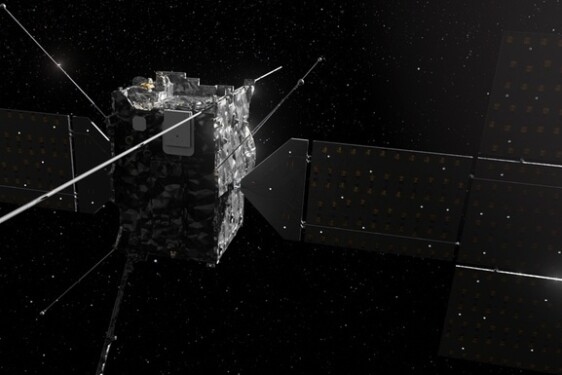
The Nançay Decameter Array (NDA, constructed with the support of CNES) and NenuFAR, two radiotelescopes of the Nançay Radio Observatory operated by our team, routinely observe the auroral radio emissions of Jupiter’s magnetosphere between 10 and 40 MHz, bringing a unique ground-based support to the Juno spacecraft, which explores the Jovian auroral regions in-orbit since 2016, and preparing the arrival of JUICE, both missions being equipped with radio instruments in the team of which we are officially involved. The Jovian polar magnetosphere produces the most powerful auroral emissions of the solar system, dissipating tens of 1e12 W of input power at radio and UV wavelengths, radiated above and within the upper atmosphere, respectively. Such emissions powered by magnetospheric electrons accelerated at relativistic energies (1-500 keV) along high latitude magnetic field lines. The rich diversity of auroral components visible in the UV images probes very different acceleration mechanisms, sustained by huge (~1e6A) field-aligned electric currents.
The Jovian auroral radio emissions actually range from 10 kHz to 40 MHz. Their discovery from the ground in the 1950s provided the first evidence of a Jovian magnetosphere. These waves are radiated near the electron cyclotron frequency, proportional to the magnetic field amplitude, thus corresponding to radio sources extending from the atmosphere up to several planetary radii above it. They also display a high degree of circular polarization, a strongly anisotropic beaming and are associated to the UV aurorae. The prominent Jovian radio component is the long-known decametric emission driven by Io, associated with a bright UV spot near the magnetic footprint of the moon, which results from the interaction between Jupiter and Io. Similar, although different, decametric emissions driven by Europa and Ganymede, each associated with a UV footprint, have also been identified recently by our team, opening a window for comparative planetology. The remaining complex zoo of emissions is thought to be associated with the main UV auroral oval, itself supplied by electron acceleration driven by the fast planetary rotation. The nature of auroral acceleration processes driving the various auroral components have been recently challenged by the arrival the Juno NASA orbiter at Jupiter mid-2016, which explores the Jovian radiosources and acceleration regions for the first time, with radio and particle in situ measurements.
For instance, the dynamics of Jovian auroral processes at timescales below a few seconds is poorly known. This window can only be accessed by high cadence (heavy) radio data such as those taken routinely by the NDA and NenuFAR or through snapshots by Juno/Waves and soon JUICE/RPWI, which will additionally samples the wave polarization at high sensitivity. Io-Jupiter radio emissions in particular host well-known millisecond bursts (S-bursts), observed ≤10% of the emission time, drifting toward low frequencies at a few 10 MHz/s. This drift probes individual radiosources moving away from Jupiter with the resonant electrons. It can thus be inverted to map the electron kinetic energy along the Io magnetic flux tube all around Jupiter. Tracking fine structures is therefore a unique, powerful, remote diagnostic of acceleration processes driving radio emissions. Most recently, through a proof-of-concept study analyzing 1 month of NDA high resolution data, we detected ubiquitous millisecond radio bursts associated with Io, Ganymede and auroral radio emissions unrelated to moon, showing that S-bursts and the underlying electron acceleration mechanism apply ubiquituously in the Jovian magnetosphere. This result takes a particular significance while similar bursts are now routinely observed from active stars such as AD Leo.
The proposed thesis will first consist of validating the new algorithm developed at LIRA to detect drifting burst in (any) time-frequency radio spectrogram and compare it to state-of-the-art Machine Learning methods. This tool will then be systematically applied to the full NDA/NenuFAR high resolution dataset collected since 2016 (130 TB large, access restricted to our team), to Juno/Waves waveform snapshots acquired since 2016 and to JUICE/RPWI waveform snapshots to be acquired during the cruise phase to prepare future in situ observations of Jupiter. We will therefore track any radio fine structures observed from 2016 to 2025+ and map electron energies and potential drops as a function of altitude, longitude and hemisphere. The obtained 3D electron energy map will be compared to in situ electron and remote UV measurements obtained by Juno or the Hubble Space Telescope, and used to constrain the relationship between auroral acceleration and subsequent radio emission. This technique has a rich potential to be extrapolated to the radio observations of other planetary magnetospheres of the solar system and beyond.
=================
For more Information about the topics and the co-financial partner (found by the lab!); contact Directeur de thèse - laurent.lamy@lam.fr
Then, prepare a resume, a recent transcript and a reference letter from your M2 supervisor/ engineering school director and you will be ready to apply online before March 13th, 2026 Midnight Paris time!
Profile
Laboratoire
Message from PhD Team
More details on CNES website : https://cnes.fr/fr/theses-post-doctorats