
Mission
Monitoring and predicting the evolution of snow surfaces is crucial for many applications such as weather forecasting, climate change studies, water resource management, mountain tourism, permafrost monitoring, and plant ecology. Snow plays a unique role in the Earth system due to its high reflectivity and low thermal conductivity. The energy exchanges between the snowpack and the atmosphere differ greatly from those on other land surfaces. Snow surface temperature responds more rapidly and with greater amplitude to small changes in the energy balance. In mountainous regions, slope orientation creates sharp contrasts in surface conditions, leading to temperature differences of up to 10°C between south- and north-facing slopes over short distances. The surface temperature in turn govern snow-cover evolution, particularly the production of meltwater in spring. However, observing surface temperature in mountains at relevant spatial and temporal scales is difficult because of complex topography and rapidly changing conditions.
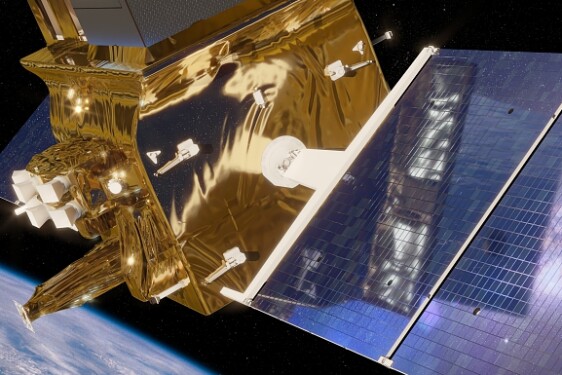
The Trishna satellite mission (CNES/ISRO, planned launch in 2027) will bring major advances in snow monitoring. It will measure radiation in the thermal infrared (TIR) and in the visible, near- and shortwave infrared domains, from which surface temperature and albedo, two key variables for the SEB, can be estimates. Trishna will perform acquisitions every three days at a 60 m resolution, significantly improving the spatio-temporal trade-off compared with missions such as Landsat 8 or VIIRS. This is particularly valuable for snow, given its strong temporal variability and spatial heterogeneity. Yet, retrieving accurate surface temperatures from Trishna over snow still faces several knowledge gaps.
In recent work, we have established study sites at Col du Lautaret in the Alps and Pic du Midi in the Pyrenees, equipped with thermal cameras that record brightness temperature. From these, surface temperature is estimated using emissivity, a key factor also needed for estimating surface temperature from Trishna data. However, emissivity variations with wavelength (8–12 µm), incidence angle, and liquid water content are not well characterized, inducing uncertainties. The dependency on incidence angle is especially problematic in mountains, where Trishna will view each slope under a different local angle, and where our cameras installed low to the ground, record at grazing angles. Such angular uncertainties (~0.01 in emissivity) can cause 1–2°C errors in surface temperature estimates. Similarly, the transition from dry to wet snow may bias temperature estimates near 0°C, making it difficult to detect melting. We propose to address these issues through dedicated emissivity observations and modeling.
The objective of the PhD is to investigate emissivity changes as a function of incidence angle and liquid water content, and to exploit the first Trishna observations over our test sites to assess their accuracy. The work will combine experiments, radiative transfer modeling, and data analysis.
The experimental component will involve measuring brightness temperature at various angles and under different snow conditions (cold … melting). At the meter scale, we will use a ground-based goniometer, and a drone at larger scales. Measurements will be taken with a thermal camera, a high-precision infrared radiometer, and possibly a multispectral radiometer. The main challenges are achieving high measurement accuracy, controlling the sky and surounding terrain radiance, and characterizing the snow properties.
The modeling work will rely on an existing ray-tracing model that simulates photon paths in snow microstructures, previously used for near-infrared wavelengths. Its extension to the thermal infrared will allow computation of emissivity for given snow microstructures and viewing angles. The main challenge will be to accurately represent surface conditions, since photon penetration depth in the thermal infrared is extremely small, making the snow surface “skin” crucial for emissivity estimation and very small temperature variations within the top millimeter can strongly affect apparent emissivity. Applying the model to snow containing water is an additional challenge, as this has not yet been attempted.
Since Trishna launch should occur during the first year of the PhD, the second part will focus on calibration/validation of the first satellite observations over the test sites. The Col du Lautaret site will be reimplemented, and ancillary ground observations will be made during each satellite overpass under clear-sky conditions. The goal will be to compare satellite-derived and in situ surface temperatures and to analyze discrepancies.
The PhD will be conducted at IGE (Grenoble, France).
=================
For more Information about the topics and the co-financial partner (found by the lab!); contact Directeur de thèse - ige-direction@univ-grenoble-alpes.fr
Then, prepare a resume, a recent transcript and a reference letter from your M2 supervisor/ engineering school director and you will be ready to apply online before March 13th, 2026 Midnight Paris time!
Profile
LABORATOIRE
Message from PhD
More details on CNES website : https://cnes.fr/fr/theses-post-doctorats