
Mission
The orbits of dwarf galaxies represent a cornerstone in our quest to understand both the formation history of the Local Group and the broader validity of the ΛCDM cosmological model. Dwarf galaxies, as the most numerous and dark matter-dominated systems in the Universe, serve as powerful probes of structure formation on small scales. Their spatial and kinematic distributions around massive hosts like the Milky Way (MW) and Andromeda (M31) have revealed intriguing, large-scale planar structures (large disks of dwarf galaxies that orbit around their host). These configurations challenge the predictions of ΛCDM simulations, which typically produce more isotropic distributions of satellite galaxies. While these planes could hint at deficiencies in the standard cosmological paradigm, their persistence and origin remain debated. A critical limitation in resolving this tension lies in the uncertainties surrounding the orbits of these dwarf galaxies. Without an accurate knowledge of their orbits, it is impossible to definitively determine whether these planar alignments are long-lived features or merely transient artifacts.
Refining the orbital motion of Local Group dwarf galaxies is also essential to refine our understanding of the dark matter halos that envelop the MW and M31. By improving the accuracy of proper motion measurements, we can eschew the usual assumption of isotropy and place tighter constraints on the shape, mass, and dynamical state of the dark matter halos of these two galaxies.
The primary obstacle to constraining the dwarf galaxies' orbits is the measurement of proper motions (the apparent angular motion of dwarf galaxies across the sky). Proper motions are notoriously difficult to determine with high precision, as they are plagued by both statistical and systematic uncertainties. Statistical uncertainties arise from the limited number of observable stars or the temporal baseline of observations, while systematic uncertainties stem from challenges in anchoring measurements to a stable astrometric reference frame.
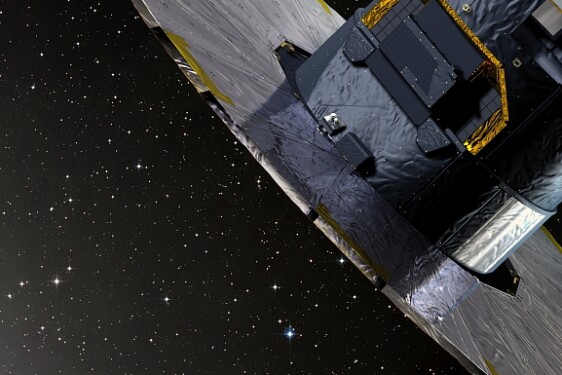
This PhD project aims to tackle these challenges by leveraging the complementary strengths of multiple space-based observatories. The Gaia mission, particularly with its forthcoming Data Release 4 (DR4), offers an unparalleled astrometric reference frame with exceptionally low systematic uncertainties. However, Gaia’s sensitivity is confined to the brightest stars of dwarf galaxies within the MW surroundings, leading to larger statistical uncertainties. In contrast, archival observations from the Hubble Space Telescope (HST) provide deep, high-resolution astrometry for hundreds to thousands of stars in dozens of dwarf galaxies, spanning temporal baselines of a decade or more. These HST data yield exquisite statistical precision but are hampered by the telescope’s narrow field of view, which complicates the alignment with a global reference frame. The scarcity of background sources, such as distant galaxies or quasars, within these small fields introduces significant systematic uncertainties, as evidenced by discrepancies between Gaia and HST-derived proper motions for the same systems.
To overcome these limitations, the selected PhD candidate will undertake a comprehensive analysis that combines data from Gaia, HST, and, where available, recent additional epochs from the James Webb Space Telescope (JWST) or the wide-field, deep view of the Euclid mission. By cross-calibrating these datasets, the student will place all proper motion measurements onto a single, homogeneous scale, combining the strengths of each set of observations. This unified approach will enable the reconstruction of the three-dimensional orbits of Local Group dwarf galaxies with unprecedented accuracy and, as importantly, limit the systematic uncertainties that currently plague such measurements. Beyond its immediate scientific goals, this project will contribute to the development of advanced astrometric techniques, particularly in the combination of heterogeneous datasets. These can be reused in the future by supplementing current data with further high-quality astrometry from Gaia DR5, Roman, or future space facilities.
=================
For more Information about the topics and the co-financial partner (found by the lab!); contact Directeur de thèse - nicolas.martin@astro.unistra.fr
Then, prepare a resume, a recent transcript and a reference letter from your M2 supervisor/ engineering school director and you will be ready to apply online before March 13th, 2026 Midnight Paris time!
Profil
LABORATOIRE
Mot du recruteur
More details on CNES website : https://cnes.fr/fr/theses-post-doctorats