Mission
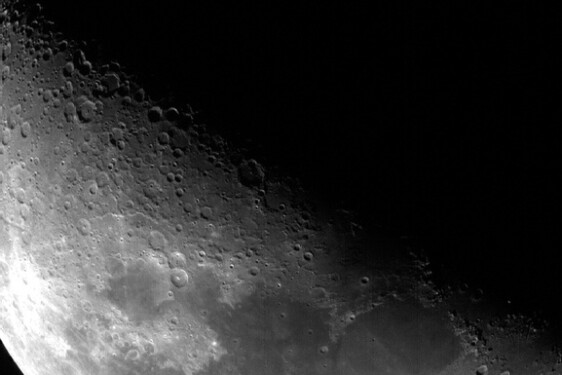
Lunar exploration is one of the major objectives currently pursued by international space agencies such as CNES or ESA. In this context, ONERA has been conducting studies and research on lunar dust for about ten years. Since the observations made by astronauts during the Apollo missions, lunar dust has been known to constitute a major obstacle to prolonged stays on the lunar surface (missions lasting several months). This dust adheres to almost everything and causes problems for mechanism reliability, degradation of thermal‑coating properties, damage to space suits, and nuisances—or even health risks—for astronauts. Its behavior is sensitive to the environment, including radiation (UV and electrons), micrometeoroid impacts, and the extreme temperature variations found on the Moon’s surface, ranging from -230°C to +120°C. To assess the effectiveness of risk‑reduction methods and to understand the underlying physical mechanisms, ONERA develops and uses experimental facilities and numerical tools capable, respectively, of simulating part of the lunar environment (vacuum, plasma, VUV photons, lunar‑dust simulants) and of extrapolating —at least partially— the results to lunar conditions (reduced gravity, solar wind, irradiations). Within projects carried out at European level, the Space Environment Physics Instrumentation Department (DPHY) studies the electrical properties of dust, such as charge and adhesion.
In this context, the PhD student will take part in the development of experimental facilities and protocoles aiming at measuring the electrical properties (conductivity, dielectric permittivity, rugosity, Van der Waals forces, net charge…) of lunar dust simulants in representative environments. For this purpose, ONERA has a vacuum chamber called CHARM, equipped with a VUV source, an electron gun, and laboratory visualization and diagnostic tools (potential probes, optical microscopy, dust grain charge detector, high‑speed camera).
The first part of this research work will consist of a literature review of the electrical characteristics of the various lunar dust simulants and the techniques used to measure their electrical properties. Based on this bibliographic analysis, the PhD student will develop an experimental measurement protocol aiming at characterising the electrical properties that most affect the charge and adhesion of lunar dust simulants. The goal will be to measure and compare, under irradiation and at varying temperatures, the impact of the dust grains’ electrical properties on observables such as the surface potential of a dust layer, macroscopic and microscopic charge, the conductivity of a dust layer, and the adhesion forces at single grain scale. This doctoral research work will be carried out in synergy with an ongoing thesis funded by CNES and focused on numerical modelling of the effect of the radiative environment on dust charge and its adhesion forces.
=================
For more Information about the topics and the co-financial partner (found by the lab!); contact Directeur de thèse - Pierre.sarrailh@onera.fr
Then, prepare a resume, a recent transcript and a reference letter from your M2 supervisor/ engineering school director and you will be ready to apply online before March 13th, 2026 Midnight Paris time!
Profil
Laboratoire
Message from PhD team
More details on CNES website : https://cnes.fr/fr/theses-post-doctorats