Mission
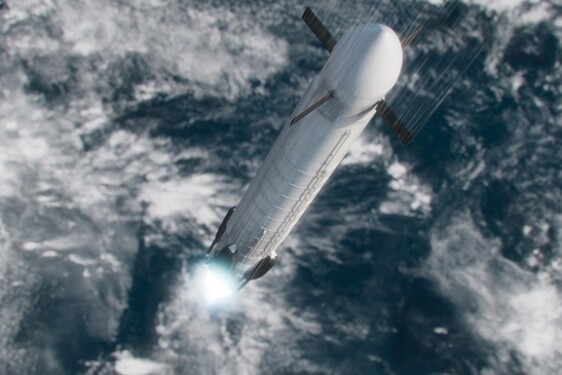
In recent years, the aerospace industry has been increasingly considering the use of carbon-fiber-reinforced polymers (CFRP) for the development of future reusable launch vehicles (Fikes, J.-C., 2024 ; Underhill, K. et al., 2022) The growing interest in composite materials lies in their potential for reducing the structural mass of future spacecraft compared to metallic alloys, while ensuring extended service life. Among these materials, thermoplastic matrix (TP) composites have emerged as particularly promising candidates for the production of uncoated LH₂/LOX cryogenic tanks (Condé-Wolter, J. et al., 2023). Their better fatigue and microcracking toughness, recyclability, and enhanced tolerance to thermo-mechanical shocks, compared to thermoset matrix (TS) composites, make them highly attractive for such applications (Krueger, R. and Bergan, A., 2024). However, the understanding of their damage mechanisms remains incomplete at room temperature and especially low temperature. Furthermore, the models developed for TS composites (Bois, C. et al., 2014 ; Vereecke, J. et al., 2024) cannot be directly transposed to thermoplastics, and the state of the art in numerical simulation is still limited.
To explore these mechanisms, an exploratory campaign was carried out in 2024 on high-performance thermoplastic and thermoset matrix composites. In collaboration with the Centre des Matériaux de l’Ecole des Mines de Paris, ONERA conducted multi-instrumented tensile tests, at room temperature, on the Bulky load frame (Proudhon, H. et al., 2018) at synchrotron SOLEIL. These experiments revealed damage patterns in TP composites different from those observed in epoxy matrix composites, with more diffused matrix cracks and less likely to extend to the surface (Giakoumakis, G. et al., 2024). This suggests a potentially reduced permeation in thermoplastics and therefore a better sealing, which would be critical for cryogenic tank applications.
The proposed PhD research project is a follow-up to this work, and aims to deepen the understanding of thermoplastic composite behavior at low temperatures. It is structured in two complementary parts. The first, an exploratory experimental phase, involves conducting in situ synchrotron tensile tests, this time studying the damage mechanisms at low temperatures. This will involve adapting the Bulky load frame for cryogenic conditions and perform thermomechanical experiments. Multi-instrumented acquisition will enable the initiation and propagation of matrix cracks to be monitored during the test. The second phase of the project, numerical, involves adapting diffuse micromechanical damage models (Doitrand, A. et al., 2015) to the specific characteristics of thermoplastic composites, based on the experimental data. This work aims to provide a detailed description of crack patterns and percolation scenarios in cryogenic environments on these materials. To this end, an in-depth comparison between experimental and numerical results will be carried out, constituting a key stage of the thesis project. In addition, the effects of stacking sequences and manufacturing processes will be studied in simulation, taking into account the actual conditions of the synchrotron tests.
The results of this research are expected to feed a unique database of thermoplastic composite damage mechanisms, derived from innovative synchrotron instrumentation. This database will provide key insights about the influence of crack morphology in thermoplastic composites on hydrogen pathways under cryogenic conditions, and therefore on leakage losses. The integration of the experimental data will enable the development of more robust and representative phenomenological models, and contribute to a rise in technological maturity for the use of these materials in future launcher cryogenic tanks. These efforts align with the CNES/ONERA roadmap for reusable launchers, aiming to prepare the next generation of aerospace vehicles, reduce the cost of access to space, and limit the environmental footprint through more efficient and sustainable technologies.
=================
For more Information about the topics and the co-financial partner (found by the lab!); contact Directeur de thèse - sebastien.joannes@minesparis.psl.eu
Then, prepare a resume, a recent transcript and a reference letter from your M2 supervisor/ engineering school director and you will be ready to apply online before March 13th, 2026 Midnight Paris time!